There is no garden without work, that’s clear. And at the same time the garden (or front garden!) does not have to do more work than necessary. 🙂 The right choice of plants and well-thought-out planning are the key to minimizing maintenance and still creating an aesthetic and vibrant garden. In this article we will show you what we think are the most important points in designing your garden and purchasing plants that you should consider to have more fun and less work in the garden in the long term:
1. Consider site conditions
It may seem trivial, but it is essential to ensure that your plants can grow strong and healthy without being subject to diseases and pests: they must be planted in a place in your garden that is suitable for them. And for this reason it is important to know the respective environmental conditions in your garden well. What are the lighting conditions when the sun appears? How much wind is there in which corner of your garden? And what condition is the ground in? Is it more of a sandy or clayey soil? This has, among other things, effects on nutrient and water requirements. Front gardens, in particular, often face east or north and may receive little or no sun, so you should definitely take this into account. For these special corners in the garden or yard, you can find specific planting tips in our blog post on garden plants for shade.
Proper soil types and care tips
2. Native, drought-tolerant plants: perfect for your local climate
Native plants are adapted to the local climate and soil conditions, which is why they usually require less care. They need fertilizer and water less often as they get used to specific weather conditions. In times of climate change, drought-tolerant plants are also ideal for regions with hot summers and low rainfall, as they can easily withstand longer periods of drought. Here you will find a detailed introduction to 10 drought-tolerant shrubs that can survive hot, dry summers well.
Children’s Souls:
- Aronia (Aronia): This hardy plant is not only easy to care for, but also very robust and requires little water. In autumn it produces bright red fruits, which serve as a food source for birds, but are also very healthy for humans as a snack.

- Sea buckthorn (Hippophae rhamnoides): Sea buckthorn is ideal for dry, sandy soils and adapts perfectly to natural gardens. Its silver-green leaves and bright orange berries make it a real eye-catcher. The fruits are rich in vitamins and provide valuable food for birds in winter. Sea buckthorn needs a sunny location and can also withstand windy and salty locations – ideal for sunny, easy-care corners of the garden.

- Potato Rose/Apple Rose (Rosa rugosa): The hardy potato rose is ideal for a wide variety of locations. It is extremely hardy, tolerates salty air, resists drought and forms dense hedges. It almost does not need to be watered and is not very susceptible to disease. The dense, fragrant flowers and later rose hips provide food for insects and birds. Ideal for natural gardens and rather rugged environments.

- Devil’s Bush (Physiocarpos opulifolius Diabolo): With its dark red leaves, the Devil’s Bush bears ‘Diabolo’‘ Color and structure in the garden. It is extremely adaptable and thrives in both sandy and clay soils. The plant is easy to care for because it tolerates drought well and hardly requires pruning. This shrub grows in both sun and partial shade and enriches the garden without being too fussy.

3. Ground cover and perennials as weed blockers
Ground cover and perennials are the secret weapons against weeds! They cover the soil firmly and prevent the growth of unwanted plants – and at the same time also ensure a beautiful play of colors in the flowerbed! They also ensure a cooler soil surface and therefore help retain moisture. This means you don’t have to water your garden as often. Bark mulch is not recommended because the tannic acid it contains, which inhibits the growth of weeds, also deprives the soil of nutrients and makes it acidic.
Easy-care ground cover for various locations
- Shadow areas: Plants such as golden strawberries (Waldsteinia ternata) or small periwinkle (Vinca minor) are suitable here. They form dense mats and are suitable for semi-shaded to shaded locations.


- Sunny areas: Blue or green bearskin grass is a modern ground cover that loves sun and is extremely easy to care for. Both are also suitable for rather dry places.

4. Easy-care trees instead of topiaries
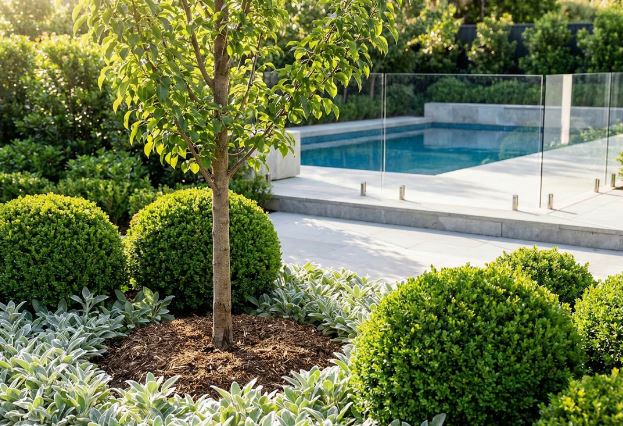
Topiary trees such as boxwood or topiary hedges require regular pruning and care. Easy-care ornamental shrubs, on the other hand, often maintain a harmonious shape on their own and require little attention. If you cut them every few years, that’s more than enough.
Examples:
- Dogwood (Cornus mas): very robust and easy-care shrub that flowers at the beginning of the year, providing food for bees and producing edible fruit even for us humans in autumn. Birds also love the fruits as well as the bush itself, which offers them protection. For us, carnelian is a real gem for experts because it is very versatile, resistant and ecologically precious.

- Red Dogwood (Cornus alba Sibirica): The Siberian dogwood has red branches in winter that look fantastic when combined with snow. It is easy to care for and adapts well to different soils.
5. Herbs attract attention
Ornamental grasses are one of the garden trends of recent years – and rightly so. Because they give your garden a natural structure, their different sizes allow for different levels of garden design – and they are also extremely easy to care for. They only need to be pruned in spring, and even in winter, when the wilted panicles are covered in ice, they are an eye-catcher in the garden or yard. You can find detailed tips on garden design with ornamental grasses in this blog post.
Suitable herbs for different positions
- Chinaschilf (Miscanthus): Classic grass for clay soils, its large ears create a spectacular silhouette in autumn and winter. It loves the sun and only needs pruning in spring. There are also many different varieties and different sizes, so they can be integrated into a rather small garden.

- Lampenputzergras (Penniseto): Tolerates both sandy and clay soils and attracts attention with its soft flower spikes. It is not demanding and only needs to be cut once a year.

6. Prevention of pests through the choice of plants
With a well-thought-out selection it is possible to keep pests away without having to use chemicals. Some plants actually repel pests or attract beneficial insects that help maintain ecological balance.
Examples:
- Thyme and sage: These Mediterranean herbs are not only easy to care for and drought tolerant, but they also repel snails and attract bees.
- Lavender: Effective against aphids and other harmful insects. The scent is pleasant for us, but deterrent to many parasites.
- Marigold: Particularly suitable for the vegetable garden or vegetable garden. Marigolds ward off harmful soil organisms and thus support the growth of nearby plants.
7. Well-designed hedges: protect privacy without much effort
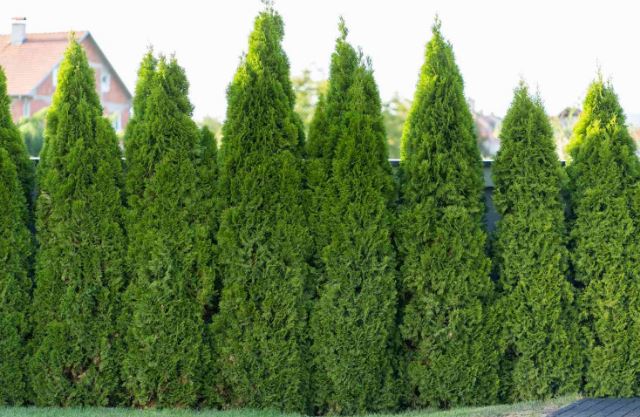
A hedge provides privacy, structure and nicely outlines the garden. To save yourself a lot of work with topiary, it is better to choose hedge plants that grow slowly or do not need to be cut at all.
Easy-care garden hedge ideas:

- Hornbeam (Carpinus betulus): Hornbeam hedges are wonderfully dense and robust. In autumn the leaves turn yellow and often remain drooping until winter.

- Yew (Taxus baccata): Yew is evergreen, easy to care for and does not require much water. It can be easily shaped, but even without cutting it remains a stunning natural privacy screen.

You can find a comparison between various “classic” hedge plants regarding the amount of care required in this blog post on hedge plants. Our selection of narrow hedges is particularly useful for small gardens or front gardens.
A hedge wild bushes (see our theme packages «Native natural hedge for birds and insects» and «Native wild shrubs») is recommended from an ecological point of view and usually offers the benefits of beautiful flowers and/or fruit, but ultimately requires a little more maintenance. When cutting, it is generally not possible to use hedge trimmers because wild shrubs usually flower on annual wood. In this case, a clearing cut is therefore advisable rather than a hedge cut.
8. Reduce lawns
Yes, lawns are quiet and have a relatively “clean” appearance, but they require regular mowing, watering, and fertilizing, all of which are relatively labor-intensive. A good alternative are larger planting areas with easy-care ground cover or a beautiful wildflower meadow. On the one hand this brings color to the garden and the insects also enjoy plenty of food! Or you can simply let your lawn get a little wilder.
You see: gardening can definitely be scaled back, but things can still grow and flourish in your yard – and you can even support wildlife at the same time! If you are looking for support in choosing the right plants for your garden, contact us: we will advise you individually!
latest posts published

Taking over a craft business: purchase, legal issues and more

Estimating costs in commercial transactions: it doesn’t always have to be free!

The 10 most important questions in summary

Plant, care for and trim harlequin willow correctly
Fast-growing trees and shrubs for impatient gardeners: chaffinch

How do we choose the right carpet? – Select Design

Building Information Modeling (BIM) for merchants

Best practices in financing management

This will change for artisans in 2025