Are you planning your garden and don’t want to have to wait forever until your garden is green? Then fast-growing trees and shrubs are the perfect solution! In this article we will introduce you to some of the best candidates that will give your garden more structure, privacy or blooms in no time.
1. Hainbuche (Carpinus betulus)
Hornbeam is a classic hedge plant – and for good reason! With a growth rate of up to 40-50 cm per year it is one of the particularly fast representatives. The dense branching and attractive jagged foliage create an elegant natural hedge that retains a certain privacy function even in winter thanks to the dry leaves.
Hornbeams are extremely robust and resistant to heat, cold and wind. They thrive in both sandy and clay soils and can even tolerate temporary waterlogging. Because they tolerate pruning, hornbeams can be formed into precise shapes, making them particularly popular for formal hedges. They also constitute a valuable habitat for birds and insects.
Garden Styles:
- Formal garden
- Natural garden
- Landscaped garden
- Farm and vegetable garden
Usage:
- Dense hedge plant for privacy
- Shaped hedges and windbreaks
- Structural plant in the garden
Position: Sunny to partially shaded
Treatment: Regular pruning in late summer keeps the hornbeam in shape and promotes dense growth. It is particularly easy to cut into geometric shapes.

2. Privet (Ligustrum vulgare Atrovirens)
The common privet is a real all-purpose weapon in the garden: robust, easy to care for and extremely easy to cut. With an annual growth of up to 60 cm it is possible to obtain a dense, evergreen hedge in a very short time. Privet is also hardy and retains its leaves even in mild winters.
Privet is particularly suitable for delimiting properties and as privacy protection. Thanks to its tolerance to pruning, it can take many forms, from free growth to strict, geometric hedges. It is very adaptable to different soil conditions and thrives even in difficult places. It is also extremely popular with birds as a nesting place.
Garden Styles:
- Formal garden
- Rural garden
- Natural garden
- Front yard
Usage:
- Evergreen hedge
- Delineation of properties
- Privacy screen in front yard
Position: From sunny to shady
Treatment: Prune regularly in summer to encourage branching and ensure a dense hedge.

3. Roter Hartriegel (Cornus alba Sibirica)
An eye-catcher in the garden: This red dogwood impresses not only with its rapid growth (up to 50 cm per year), but also with its showy red branches, which are particularly effective in winter. In spring and summer it has green leaves and white flowers, which then form black berries: a feast for the birds!
The red dogwood is particularly adaptable and does well in both sunny and partially shaded locations. It grows even in nutrient-poor soil and is extremely easy to care for. Ideal for natural gardens or as an eye-catching hedge along driveways.
Garden Styles:
- Natural garden
- Bird sanctuary
Usage:
- Ornamental shrub in the garden or flowerbed
- Color contrasts in winter
- Hedge plant with a special character
Position: Sunny to partially shaded
Treatment: Radical pruning in spring favors the development of bright red shoots.

4. Hazelnut (Corylus avellana)
The hazelnut is appreciated not only for its delicious fruits, but also for its rapid growth of up to 60 cm per year. The shrub forms a sprawling crown and is ideal as a natural hedge or as a solitary plant in the garden. Yellow catkins are especially attractive in spring, adding color to the gray earlier in the year.
Hazelnut bushes are extremely easy to care for and thrive even in partially shaded locations. Edible nuts are not only a treat for humans, but also an important food source for squirrels and birds. Thanks to their dense branching they also offer good privacy protection.
Garden Styles:
- Rural garden
- Natural garden
- Bird sanctuary
- Nutzgarten
Usage:
- Natural hedge
- Bird protection tree
- Lonely in the cottage garden
Position: Sunny to partially shaded
Treatment: In winter, thinning cuts can be made to maintain the shape of the bush.

5. Cherry laurel (Prunus laurocerasus)
The cherry laurel is also a classic evergreen hedge plant. With an annual growth of up to 50 cm, it forms a dense and compact hedge in a very short time, but it also requires space. Its shiny, dark green leaves give the garden an elegant touch and it also looks good as a solitary plant.
The cherry laurel is extremely robust and resistant, but sensitive to water stagnation. It grows in both shade and sun, making it versatile. As a hedge plant it offers privacy all year round and protects from prying eyes.
Garden Styles:
- Mediterranean garden
- Formal garden
- Evergreen garden
- Front yard
Usage:
- Evergreen hedge
- Privacy screen in front yard
- Provides structure in the garden
Position: From sunny to shady
Treatment: Prune in spring and if necessary in summer to maintain shape and promote density.

6. Forsythia (Forsythia x intermedia)
With its bright yellow flowers, forsythia is a harbinger of spring that cannot be overlooked. The shrub grows 30-40 cm per year and brings color to the garden when other plants are still dormant. Forsythia are extremely hardy and thrive in both sunny and partially shaded locations. They look particularly beautiful as solitary plants or in loose flower hedges.
Forsythia are not only a visual highlight, but also easy to care for. They do not require complex care and are very easy to cut. After flowering, pruning is advisable to encourage an abundance of flowers next year. Because of their abundance of flowers, they are an attraction to bees and other pollinators.
Garden Styles:
- Rural garden
- Natural garden
- Spring garden
- Front yard with floral accents
Usage:
- hedge of flowers
- Solitary in the front garden
- Floral accent in the bed
Position: Sunny to partially shaded
Treatment: Pruning after flowering promotes strong new shoots and an abundance of flowers.

7. Weigelie (Weigela, Florida)
The pink Weigela is a true floral miracle! With growth of 30-50cm per year and an abundance of pink flowers in spring and summer, it brings color and life to the garden. It looks especially impressive when planted as a solitary plant or in groups.
Weigelias are hardy and easy to care for, can adapt to almost any garden soil and thrive best in sunny or partially shaded locations. After the first flowering, pruning can be done to encourage a second flowering. Thanks to its dense growth habit, the weigela also offers light privacy and is suitable as a flowering hedge.
Garden Styles:
- Rural garden
- Romantic garden
- Flower garden
- Front yard with floral accents
Usage:
- Solitary plant in flower
- hedge of flowers
- Color accents in the bed
Position: Sunny to partially shaded
Treatment: Prune after flowering to encourage branching.

8. Buddleia (Buddleja davidii)
The buddleia, also known as butterfly bush, grows up to 50 cm per year and enchants with its fragrant flower spikes. Butterflies love it – a real highlight in the nature garden! Flower colors range from purple to pink to white and add a colorful touch to any garden.
Buddleia is undemanding and tolerates dry places well. Severe pruning in spring favors the formation of flowers and keeps the plant compact. It looks particularly beautiful as a solitary plant in a flower bed or in combination with other flowering shrubs.
Garden Styles:
- Natural garden
- Flower garden
- Bee and butterfly garden
- Mediterranean garden
Usage:
- Lonely flowered in bed
- Bee and butterfly magnet
- Color contrast with the green trees
Position: Sunny
Treatment: Severe pruning in spring favors the formation of flowers.

9. Elderberry (Sambucus nigra)
The elder convinces not only with its rapid growth (50-70 cm per year), but also with its many uses. Umbrellas of white flowers appear in spring, turning into deep black berries in late summer, perfect for jellies, syrups or liqueurs. Elderberry is also a valuable bird protection tree and offers pleasant privacy in summer.
Elderberry bushes are extremely hardy, frost resistant and thrive in almost any soil. They prefer sunny or semi-shaded positions and get along well even with poor soil. With its decorative leaves and flowers, elderberry enriches natural and agricultural gardens.
Garden Styles:
- Rural garden
- Natural garden
- Nutzgarten
- Bird sanctuary
Usage:
- Natural hedge
- Lonely in the cottage garden
- Commercial trees for harvesting and processing
Position: Sunny to partially shaded
Treatment: Regular thinning in winter.

Conclusion
With these fast-growing trees and shrubs you will transform your garden into a green oasis in no time. Whether privacy, flowers or animal habitats, the variety is wide and offers the right solution for every garden project. Choose your favorites and start your green project! 🙂
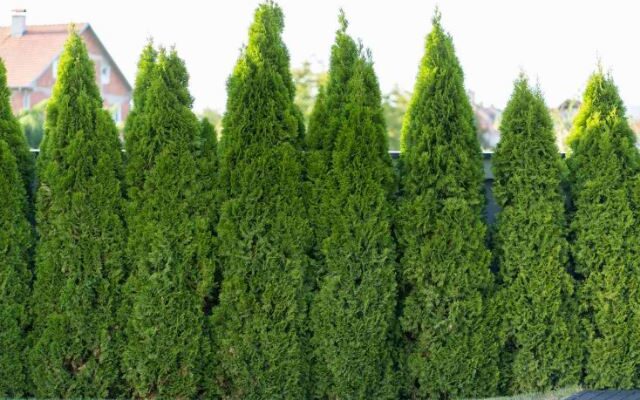
If you are specifically looking for a hedge, we recommend choosing hornbeam, privet and cherry laurel – or Leyland cypress, considered the turbo hedge par excellence because it grows very quickly – but it must also be cut very regularly so as not to become too large. 🙂
Contact us if you would like help choosing one for your yard!
latest posts published

Taking over a craft business: purchase, legal issues and more

Estimating costs in commercial transactions: it doesn’t always have to be free!

The 10 most important questions in summary
Plant, care for and trim harlequin willow correctly
Fast-growing trees and shrubs for impatient gardeners: chaffinch

How do we choose the right carpet? – Select Design

Building Information Modeling (BIM) for merchants

Best practices in financing management

This will change for artisans in 2025