Hedge trimming will start soon and you are wondering what you should absolutely pay attention to to make the work worthwhile and the result beautiful? Should you prune your hedge in autumn or spring? In fact there are some things to consider, also because all hedge plants are cut in the same way.
We will then show you the most common mistakes when cutting hedges and how you can do it better:
1. Mistake: Wrong time to cut the hedge
Each type of hedge has its ideal cutting time. Many people simply cut hedges when it is convenient, without paying attention to the needs of the plant, especially in midsummer, when the hedge is just in the growth phase. This can lead to poor growth, pest infestations or susceptibility to disease.
Here’s how to do it correctly:
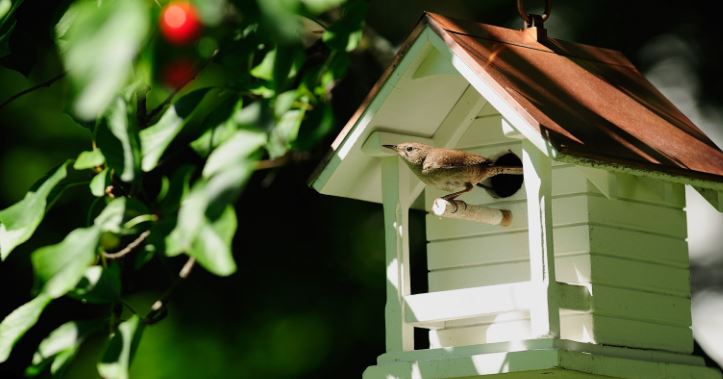
As a general rule, heavy pruning occurs in late winter or early spring, before the plants sprout and when frosts are no longer expected. All other cuts are made only in spring; a subsequent, light topiary cut can also be carried out in summer. Federal Nature Conservation Act also prohibits heavy pruning between March and the end of September to protect birds and other small animals that use hedgerows as nesting places.
The ideal time varies depending on the type of hedge:
-
Evergreen hedges As Thuja OR Cherry laurel It is best to prune in late winter or early spring. A topiary cut in summer ensures a well-groomed appearance.
-
Deciduous hedges As Rotbuche AND hornbeam They generally tolerate pruning in the fall or winter, while light topiary in the summer encourages dense growth.
- Flowering hedges As lilac OR Snowball You should only prune after flowering so as not to affect the formation of the following year’s flowers.
Also applies: At young hedges and formally pruned In the first 3-4 years, until the final height is reached, the hedge should be cut quite heavily after spring sprouting, so that the increase in height is only 10-15 cm. This means that the plant can fit well, become stable and also tolerate wind, snow and moisture pressure in the long term.
With your topiary inside Summer You should also make sure to only cut fresh shoots and not cut old wood, otherwise the plant will easily get sunburned. Topiary pruning is best done after spring shoots (around May), the second in June and then again in late summer/autumn, depending on the hedge and growth rate.
2. Mistake: Cutting in bad weather
The weather also plays an important role when cutting hedges. Many people cut hedges when the weather is too hot or humid, which can cause cutting burns or fungus growth.
Here’s how to do it correctly:
Trim your hedges on a cloudy but dry day. This is especially important with sensitive strains like this one Cherry laurel OR Privetswhich can be easily damaged by strong sun if you cut them too much. Avoid humid climates as humidity increases the risk of fungal diseases.
3rd mistake: cutting too radically
Sometimes it’s tempting to cut your hedge a lot, especially if it’s a little out of shape. But with sensitive hedge species such as Cherry laurel, Thuja Smaragd OR Leylandzypresse Too radical pruning can lead to the death of entire areas. Furthermore, excessive pruning can damage the plant and prevent its growth.
Here’s how to do it correctly:
Cut only what is necessary and ensure that sufficient leaf mass is always maintained.
-
Thuja and tree of life they do not tolerate drastic pruning in old wood since they will no longer sprout in these areas. Trim them moderately regularly to maintain their shape.
-
Cherry laurel AND Privets they are more robust, but the following also applies here: it is better to cut more often and moderately than radically once. With cherry laurel you can practically cut through old wood, but it looks quite unpretentious.
- TO Rotbuche OR hornbeam You can make cleaner cuts, but here too you have to be careful not to affect the appearance. Although these plants can tolerate such pruning, it should definitely be done during winter dormancy, otherwise they will also get sunburn.
4. Mistake: Don’t pay attention to the growth direction and correct shape
Another common mistake is to cut the hedge too straight, without respecting the natural growth direction of the plant, or to cut the hedge wider at the top than at the bottom. Especially with similar hedges Rotbuche, hornbeam AND Privets This causes the lower areas to receive too little light and become bare.
Here’s how to do it correctly:
Pay attention to the direction of growth of individual shoots and cut them at a slight angle. This facilitates the absorption of rainwater and the plant is better supplied with water. Especially if your hedge has a strong growth direction, such as hornbeam, it is important to maintain the natural shape and not cut against the growth. The cap should also be slightly rounded.
Always cut your hedge into a slightly trapezoidal shape, meaning the base of the hedge should be wider than the top. This means that each tier receives enough light and the hedge remains thick and healthy. This form of cutting is especially important for fast-growing hedges like this one Leylandzypresse OR Privets.
To ensure that the crown of the hedge is straight, you can simply stretch a string between two sticks at the desired height so that your eye can use it as a guide when cutting.
5. Mistake: Use the wrong or blurry tool
Blurry or inappropriate tools are a common but often overlooked mistake. Dull hedge trimmers result in messy, bruised cuts that weaken plants and make them susceptible to disease.
Here’s how to do it correctly:
Always use sharp, clean tools and make sure you choose a tool based on the thickness of the branches and the size of the hedge:
-
Manual hedge trimmers they are ideal for smaller hedges such as Boxwood OR Privets.
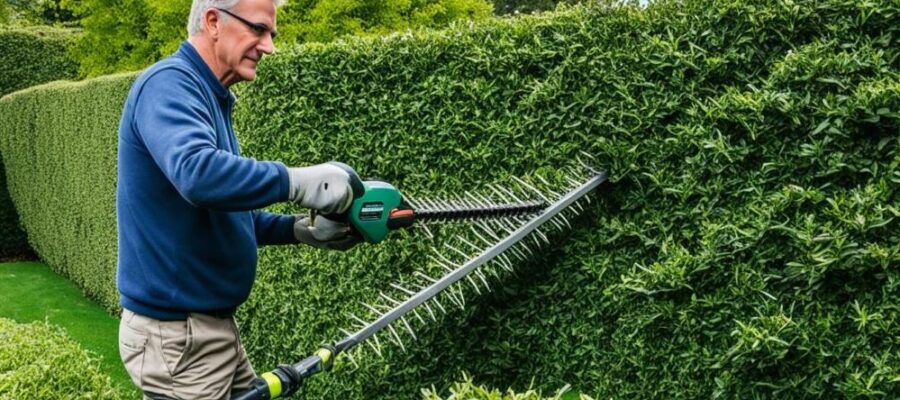
- Electric hedge trimmers they are particularly suitable for large hedges such as Thuja, Leyland cypress or hornbeam, as they allow uniform cuts. However, make sure that the blades are sharpened regularly to ensure clean cuts.
A tip for sensitive hedge species such as Cherry laurel: Since they have large leaves, it is advisable to use hand scissors, preferably for roses, to avoid tearing the leaves and avoiding unsightly brown edges.
Special tips for different types of hedges:
-
Thuja: Be careful not to cut old wood as these hedges will not regrow. Regular topiary is key here to keep the hedge in shape.
-
Cherry laurel: You should be careful with this hedge, as it tends to get brown leaf edges if it is pruned heavily. It is best to cut regularly and with sharp scissors.
-
European and hornbeam: These deciduous hedges can also be trimmed further, even into old wood. This promotes dense branching.
-
Leylandzypresse: Because it grows very quickly, you should lightly prune your Leyland cypress two or three times a year to maintain a dense, well-groomed appearance.
- Privets: This robust hedge plant withstands severe pruning and re-sprouts quickly. Regular cutting ensures a dense, green wall.
This way you can avoid the most common mistakes when cutting hedges and ensure that your hedges grow healthy and thick, regardless of the variety you have in your garden. Do you have questions or are you unsure what care your hedge needs? Feel free to contact us!
Happy gardening! 🙂
latest posts published

Taking over a craft business: purchase, legal issues and more

Estimating costs in commercial transactions: it doesn’t always have to be free!

The 10 most important questions in summary
Plant, care for and trim harlequin willow correctly
Fast-growing trees and shrubs for impatient gardeners: chaffinch

How do we choose the right carpet? – Select Design

Building Information Modeling (BIM) for merchants

Best practices in financing management

This will change for artisans in 2025