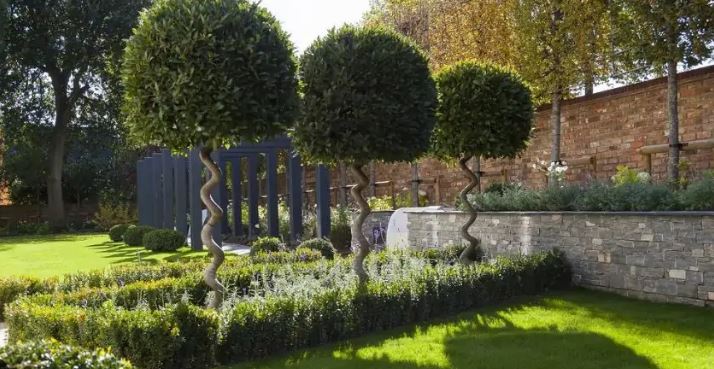
Would you like to design or redesign your garden and are a little overwhelmed? Some mistakes are difficult to fix later, others simply cost time and money. In order for your garden to become a paradise without major deviations, in this article we will show you the most common mistakes in garden design and, above all, we will show you how to do it.
1. Mistake: Starting without a plan – designing the garden without a well-thought-out concept
The error:
The plan begins without a plan: what is an exciting motto for a road trip is quite difficult here. If you start planning your garden with enthusiasm, you will likely end up with a garden that appears chaotic and unbalanced and lacking important features such as paths, seating areas or sensible privacy protection.
The solution:
Create a concept before you start. Think about what functions the garden should perform: should it be a place to relax, provide space for children to play, or provide fruit and vegetables? Draw a rough sketch that divides areas such as yards, lawns, flower beds, hedges and paths.
Practical advice:
- Create zones: Divide the garden into functional areas such as seating, vegetable patch and play area. Also plan the paths leading through the garden.
- Consider light: Plan how sunlight travels through the garden. For example, sunny areas are suitable for flower beds and ornamental grasses, while shady areas are suitable for seats or ferns.
- Everyday practical considerations: It is best to keep vegetable and herb beds near the kitchen door to shorten the journey into everyday life. In particular, the herb bed can often be used all year round, while the vegetable beds are mainly used in summer/autumn. For better harvesting, we recommend creating raised beds for vegetables and aromatic herbs. The compost, in turn, should be located away from seating, in a quiet, shaded corner of the garden.
2. Wrong choice of systems – unsuitable for location or maintenance needs
The error:
Plants are often chosen spontaneously and based on their appearance – this is understandable, but can lead to shade plants withering in the sun or high-maintenance plants quickly becoming a burden when gardening. It is therefore important to observe the lighting conditions in your garden and take this into account both in garden design and in the choice of specific plants.
Solution: The following “basic rules” make sense:
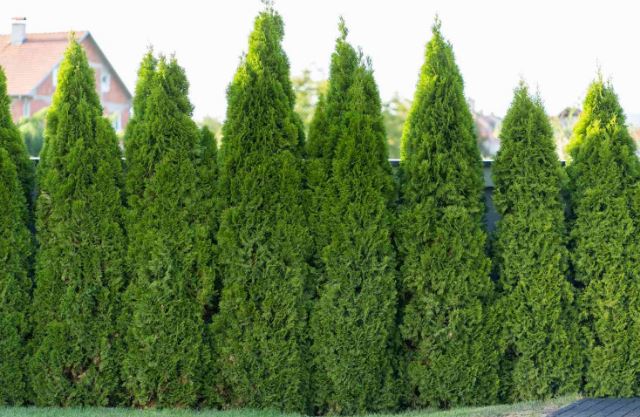
- Choose robust plants: lavender, ornamental grasses, evergreen hedges such as yew or Thuja Smaragd are easy to care for and long-lasting.
- Underplanting ornamental hedges or shrubs with easy-care perennials suppresses unwanted accompanying vegetation (weeds) and helps the soil retain water better. At the same time, the areas do not have to be mulched regularly.
- Native trees have the advantage of adapting well to local climatic conditions; Therefore they generally do not require winter protection and are also a boon for insects and animals. Example: dogwood (for us dogwood is a versatile tip), red honeysuckle, hazelnut, Pfaffenhütchen etc.
- Combination: Pay attention to the space the plant needs when fully grown and plan for this when planting.
- Also pay attention to the different flowering times of the plants and combine different plants with each other to have color in the garden all year round: there are shrubs that are the classic spring flowerers, roses bloom especially in summer, but also other shrubs such as the butterfly lilac or the bearded flower (we have summarized the most beautiful summer planters for you in this blog post) while for autumn and winter plants with particularly beautiful autumn color are ideal (in this post you will only find shrubs with exceptional autumn color) or only late flowering plants (for more details: The most beautiful winter plants).
- Small garden? There are compact shrubs (see in detail our blog post «The most beautiful shrubs for the small garden»), narrow hedges and also smaller, more compact ornamental grasses, which make sense especially in small gardens so as not to take up too much space. If you have a small garden, also be sure to play with different heights of plants (or vines) to visually enlarge the space.

3. Ignore the ground and location
The error:
Many hobby gardeners underestimate the importance of soil. It has a significant influence on the quality of plant growth.
The solution:
Check the soil before planting: is it clayey, sandy or rich in humus? Amend with compost or soil amendments if necessary, and adapt plant selection to the conditions.
Practical advice:
4. Monotony instead of variety – too little variety in the garden
The error:
A garden with just one type of plant or one color can quickly seem boring. There is a lack of highlights that please the eye or elements that make the garden interesting all year round.
The solution:
Rely on a mixture of evergreens, flowering shrubs and seasonal highlights. Also pay attention to different growing heights to give depth to the garden.
Practical advice:
5. Underestimating the amount of care required
The error:
A beautiful garden can become a burden if the maintenance commitment is underestimated. Too many sensitive plants or high water requirements quickly lead to frustration.
The solution:
Plan your garden according to your time budget. Easy-care plants and sustainable solutions make gardening easier and more environmentally friendly.
Practical advice:
-
Pruning note: Fast-growing hedges such as Leyland cypress or cherry laurel require regular pruning. Slow-growing varieties such as yew are easier to care for. So inform yourself in advance: Here we have compared popular and easy-care hedges.
-
Use mulch: Mulch reduces weeds and retains moisture in the soil, ideal for perennial beds.
- Sustainability: Collect rainwater in a container and install drip irrigation to save water.
Mistake 6: Incorrect privacy protection – If the hedge or fence does not fit into its surroundings
Mistake 6: Incorrect privacy protection – hedge or fence does not fit into its surroundings
A privacy screen provides privacy and structure in the garden, but is often thoughtlessly designed, leading to visual and practical problems.
Common errors:
- Inadequate dimensions: Fences or hedges that are too high have an oppressive effect, while fences that are too low offer no protection.
- Incorrect materials: A modern metal fence in a natural garden or a massive thuja hedge in small gardens interrupts the harmony.
- Lack of planning: Plants often grow thicker or wider than expected and overwhelm the garden space.
Specifically: We often hear that people want to plant an evergreen hedge to have complete privacy protection all year round. However, one should also take into account that the hedge blocks light, for example in winter. Depending on the distance between the house and the hedge, the question arises whether an evergreen hedge is really necessary to ensure sufficient privacy.
How can this be avoided?
- Plan the size and location carefully: narrow hedges such as privet or Thuja Smaragd are suitable for small gardens, while large plots of land offer space for more extensive variants such as Leyland cypress.
- Consider the style of the garden: a hedge of blooming wild roses suits the garden of a country house, a simple yew hedge suits minimalist designs. Classics such as hornbeam or beech fall in between: they are also reserved, but seem livelier.
- Support wildlife: hedges such as hornbeam, copper beech or wild rose provide habitat for birds and insects.
Be sure to check out our complete guide to planning your hedge! We also have inspiration for you for native trees as hedge plants, as well as for a natural hedge made from hedge plants with edible fruits or leaves!
Suggestion: A fence and hedge combination creates privacy, looks charming and also offers added value for nature.

Bottom line: With planning and knowledge you can create the garden of your dreams
With the right planning and careful garden design, a garden can easily become a personal paradise! Avoid typical mistakes by dividing your garden into zones, paying attention to plant needs and planning for variety. With an attractive, matching hedge, seasonal highlights and easy-care plants, you can create a garden you’ll be enjoying in no time.
Please feel free to contact us if you need help choosing the right plants. We will be happy to advise you and create a plant package suitable for the design of your individual garden!
Happy gardening 🙂
latest posts published

Taking over a craft business: purchase, legal issues and more

Estimating costs in commercial transactions: it doesn’t always have to be free!
The 10 most important questions in summary
Plant, care for and trim harlequin willow correctly
Fast-growing trees and shrubs for impatient gardeners: chaffinch
How do we choose the right carpet? – Select Design

Building Information Modeling (BIM) for merchants

Best practices in financing management

This will change for artisans in 2025